How to Estimate Steel Pipe Weight Before Ordering Material
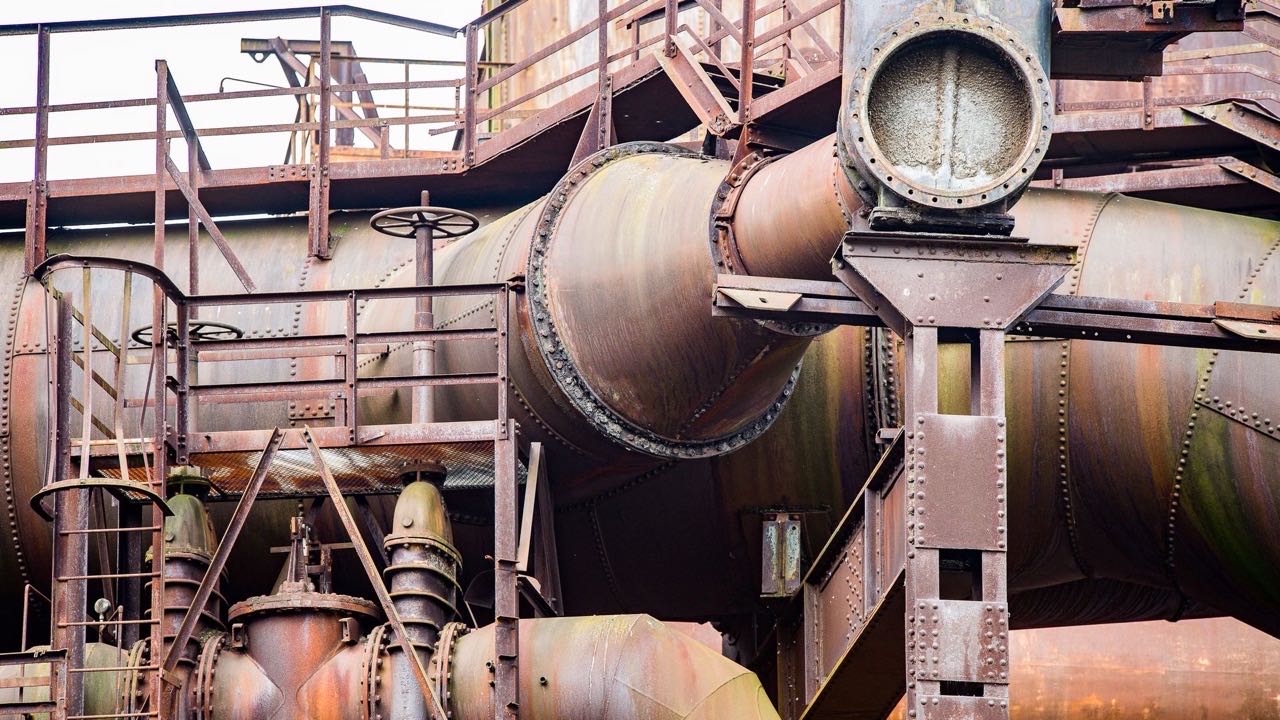
Ordering steel pipe without knowing the weight is a mistake that compounds quickly. The freight invoice arrives and it’s larger than anticipated. The crane on site has a rated capacity that you assumed was more than adequate, and now there’s a question about whether it is. The structural supports that were sized based on a quick estimate turn out to be undersized for the actual load. Each of these problems is manageable in isolation, but they share a common cause: no one calculated the pipe weight before the order went in.
Weight estimation for steel pipe isn’t a complex calculation, but it requires knowing which inputs to use and why each one matters. The formula is consistent across pipe sizes and material grades; the challenge is using the correct dimensions, which are less straightforward than they appear.
Why pipe weight estimation matters before ordering
The most immediate reason is freight. Steel pipe is charged by weight, and freight on heavy industrial materials is not a trivial line item. A project involving several hundred meters of large-diameter pipe can have freight costs that vary by thousands depending on the actual weight. Estimating conservatively protects against surprise invoices; estimating accurately allows for precise budgeting.
The second reason is structural. When pipe is suspended, supported, or installed at elevation, the support structure needs to be sized for the actual load. A preliminary weight estimate that’s significantly off can lead to supports that are over-engineered and expensive or under-engineered and unsafe. Neither outcome is acceptable on a commercial project, and the weight calculation is the input that drives the support sizing.
The third reason is logistics. Crane picks, transport configurations, and lift rigging are all rated by weight. A crane operator working from an accurate weight estimate can confirm the pick is within rated capacity before the lift happens. Working from a rough estimate introduces uncertainty into a decision that should have none.
The formula for steel pipe weight
The basic weight calculation for steel pipe uses the outside diameter, wall thickness, and length of the pipe run. The formula in metric units is:
Weight (kg/m) = 0.0246615 × (OD − WT) × WT
Where OD is the outside diameter in millimeters and WT is the wall thickness in millimeters. This formula gives weight per meter of pipe; multiply by the total pipe length to get the full order weight.
In imperial units, the equivalent formula is:
Weight (lb/ft) = 10.69 × (OD − WT) × WT
Where OD and WT are both in inches.
The constant in each formula accounts for the density of carbon steel (approximately 7,850 kg/m³). For stainless steel or alloy pipe, the density differs slightly, which changes the constant. For most carbon steel structural and process piping, the standard constant applies.
The dimension inputs that cause errors
The most common source of error in pipe weight estimates isn’t the formula — it’s using the wrong dimensional inputs. There are three specific areas where confusion typically occurs.
Nominal pipe size vs. outside diameter: Nominal pipe size (NPS in imperial, DN in metric) is a designation that doesn’t directly correspond to any actual pipe dimension. A pipe designated NPS 4 has an outside diameter of 4.5 inches, not 4 inches. This is a consistent offset across pipe sizes up to NPS 12, above which NPS and OD become numerically equal. Calculating weight using the nominal size instead of the actual OD will produce an error in every calculation for pipe below NPS 12.
Schedule number and wall thickness: The wall thickness of a pipe is determined by its schedule number (Sch 40, Sch 80, Sch XXS, and so on). The same pipe size in different schedules has significantly different wall thicknesses — and therefore significantly different weights. NPS 6 Sch 40 pipe weighs approximately 18.97 kg/m; the same NPS 6 in Sch 160 weighs 53.38 kg/m. Using the wrong schedule in a weight estimate introduces an error of up to 180% on the same pipe size.
Pipe vs. tube dimensions: Steel tube dimensions are specified differently from steel pipe dimensions. Tube OD refers to the actual outside diameter; pipe OD is the actual outside diameter only for NPS ≥ 14. This distinction matters when mixing pipe and tube in a calculation, which is more common in HVAC and structural applications.
Using a calculator vs. manual calculation
Manual calculation using the formula above is accurate and sufficient for a small number of pipe runs. For a project involving multiple pipe sizes, varying schedules, and different lengths, manual calculation becomes error-prone through sheer repetition.
A steel pipe weight calculator handles this by accepting the pipe designation, schedule, and length as inputs and returning the weight directly, without the need to look up OD and wall thickness from standard tables and then apply the formula manually. The practical benefit isn’t precision — a manual calculation done correctly is equally precise — but speed and error reduction across a large number of runs.
The other benefit is schedule lookup. Standard pipe dimension tables cover dozens of pipe sizes across multiple schedule options; a calculator that incorporates these tables eliminates the reference lookup step and the risk of reading the wrong row or column.
What to do with the weight estimate
Once you have a weight figure, there are a few specific uses that inform project planning.
For freight: contact the supplier to confirm how they classify the shipment (full truckload vs. LTL, any overweight or oversize permits required for the pipe length and configuration) and use your weight estimate to compare freight quotes. Pipe that looks similar in price can differ significantly in delivered cost depending on how freight is calculated.
For structural: pass the weight per meter figure to the structural engineer for support sizing. Include the weight of fittings, flanges, and insulation if those are specified, as they add load that the pipe weight alone doesn’t capture.
For lifting: provide the total lift weight to the crane operator before the pick, and confirm the lift is within the crane’s rated capacity at the required radius. For pipe in long lengths, the weight per length is needed to calculate the load distribution across multiple lift points.
The weight estimate is the starting point for all of these decisions. Getting it right before the order is placed is easier than correcting the downstream consequences of getting it wrong.