The Renovation Decisions That Are Easier With a Whole-House Furniture Partner
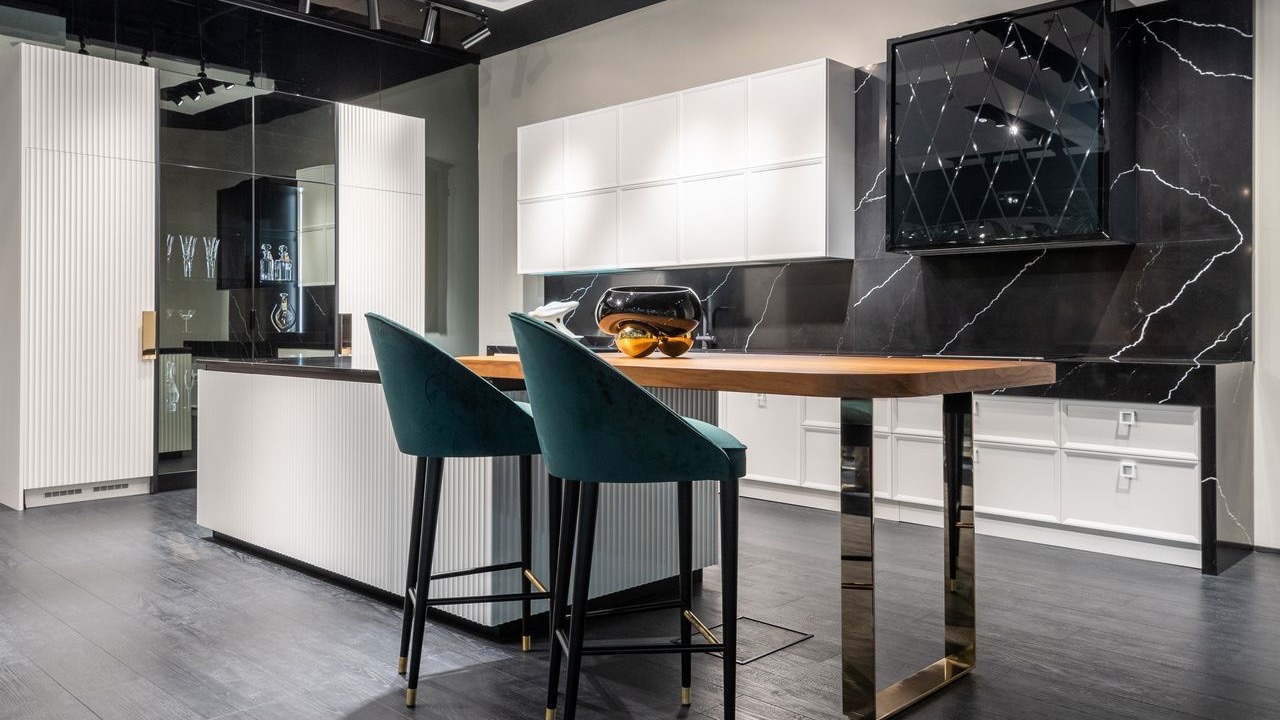
Renovation projects have a way of expanding. What starts as “we just need new kitchen cabinets” turns into a conversation about whether the wardrobe in the master bedroom should be updated to match, and then into the realization that the wooden doors throughout the apartment are dated, and then into a question about whether wall panels in the living room would tie everything together. By the time the scope is settled, the original single-category job has become a multi-room furniture coordination project.
Most homeowners manage this by accumulating suppliers as the scope grows. Kitchen cabinets from one company, wardrobes from another, doors from a third. The result is usually an interior that’s functional but not quite coherent — the finishes don’t quite match, the proportions are inconsistent, and the gaps between the renovation phases show up in small ways throughout the space.
Working with a whole-house furniture partner from the beginning doesn’t eliminate renovation complexity, but it changes the nature of the decisions you have to make.
The finish decision is made once
Color and material consistency across a home is harder to achieve than it looks. Paint colors can be color-matched. Furniture finishes can’t, at least not reliably across different manufacturers. If the kitchen cabinet veneer is a warm oak from one supplier and the wardrobe veneer is nominally the same oak from a different supplier, they’re unlikely to match under the same lighting conditions. The warm undertones in one finish and the cool undertones in the other will read as inconsistent to anyone who spends time in the space.
When everything comes from one system, this problem largely disappears. The finish library is shared across product categories, so the oak applied to kitchen doors is the same specification as the oak applied to wardrobe doors. The consistency is a byproduct of the shared material platform rather than something that requires careful specification work at every decision point.
This makes the finish decision simpler. You’re choosing from a coordinated palette rather than trying to match across different manufacturers’ color systems, and the confidence that pieces from different rooms will look related is much higher.
Dimensional coordination resolves itself
Renovation projects run into dimensional problems regularly. A new wardrobe system that doesn’t leave adequate clearance for the door swing. A kitchen run that ends at a wall before the door frame, requiring a custom filler panel. A wall panel that creates a reveal height inconsistency next to the door frame beside it.
These problems are fundamentally coordination problems — they arise because different components were designed to different module logic, and making them work together requires custom solutions at every junction.
When the kitchen, wardrobes, doors, and wall panels are all engineered within the same dimensional system, the junction details are already solved. The door frame module is designed to interface cleanly with the wall panel module beside it. The wardrobe column depth is specified to align with the kitchen cabinet depth on the adjacent wall. The custom filler work that eats installation time and budget in mixed-supplier projects is largely absent.
Procurement and delivery becomes one conversation
Managing multiple furniture suppliers through a renovation means managing multiple order timelines, multiple deposit and payment schedules, multiple delivery windows, and multiple installation crews. Each supplier operates on their own schedule and has different lead times, and the homeowner is responsible for ensuring that the sequencing works — that the kitchen is in before the flooring goes down, that the wardrobes arrive after the walls are painted, that the doors are on site when the door installation crew is scheduled.
When everything comes from one place, this coordination is the supplier’s responsibility. A piano home order that includes kitchen cabinets, wardrobes, and doors comes with a single project timeline, a single point of contact for delivery questions, and a coordinated delivery and installation sequence. The homeowner’s job is to confirm the design and be on site for delivery, not to manage the logistics between suppliers.
For most homeowners, this is the most practically significant advantage of the whole-house approach. The renovation is already a significant management burden on top of normal life. Removing the inter-supplier coordination layer reduces both the time required and the number of things that can go wrong.
Changes propagate across the project
Renovation designs change. The kitchen that was specified in February is often somewhat different from the kitchen that gets installed in May, because the homeowner has lived with the design for longer and wants to adjust it, or because site conditions revealed something unexpected, or because a countertop material is out of stock and something similar needs to be substituted.
With a single whole-house supplier, a change request goes to one place. If the kitchen finish changes, the supplier can verify whether the wardrobe finish selected is still in the same family or recommend an adjustment. If the cabinet height changes because the ceiling height turned out to be different than specified, the door frames can be adjusted in the same conversation.
With multiple suppliers, the same change requires multiple conversations, each of which may have implications for the others. A kitchen finish change with supplier A may require renegotiating a door finish with supplier B to maintain the coordination they had at the original specification — if supplier B even has the matching option.
What to look for in a whole-house partner
Not every company that offers whole-house customization is equally capable of delivering it. The meaningful signals are the depth of the product range — does it genuinely cover all the categories you need, or does it thin out in certain areas — the design sophistication of the finish options relative to your project’s aesthetic, and the production scale and track record that indicate the operational capability to execute a complex multi-category order reliably.
For renovation projects that span multiple rooms and multiple furniture categories, the question worth asking at the beginning rather than the end is whether a single well-chosen supplier might eliminate more problems than it creates. In most cases, the answer is yes.