How Hammer Blades for a Flail Mower Handle Tough Vegetation and Rocky Ground
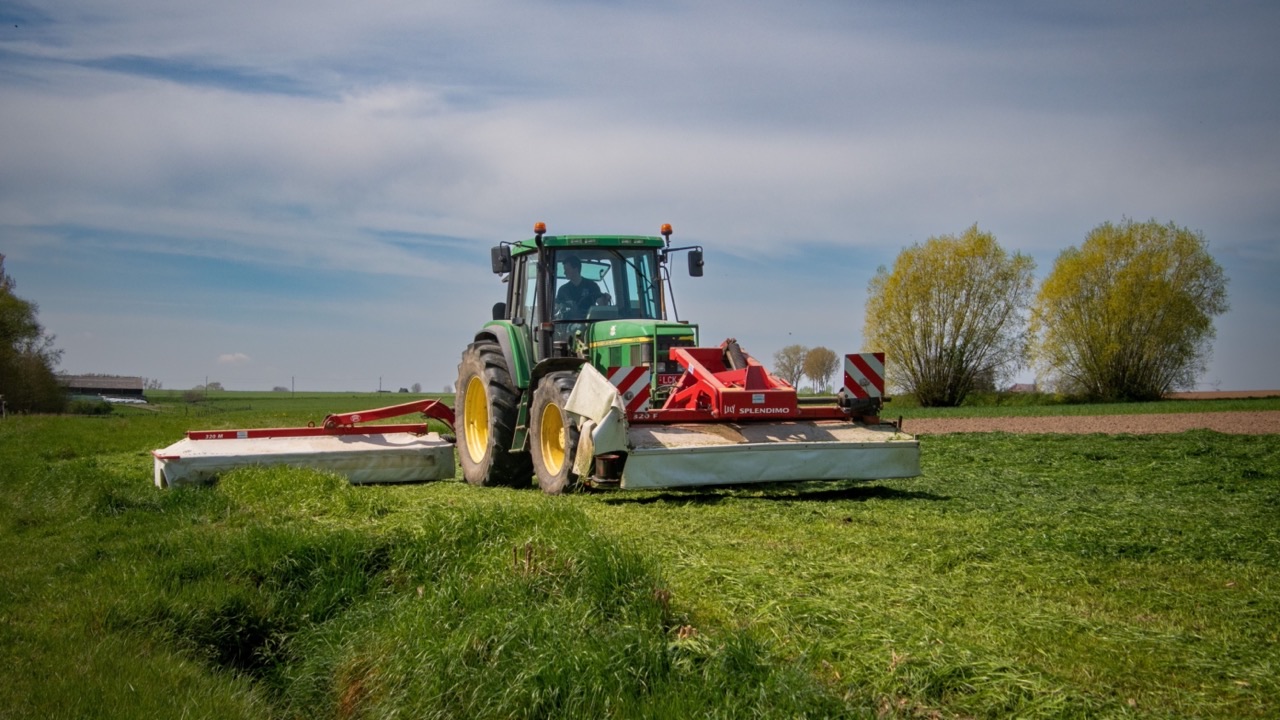
There’s a reason hammer blades are the default choice for most commercial flail mower work outside of clean cultivated fields. It’s not that they’re the sharpest cutting option — they’re not. It’s that they’re designed to take a hit and keep working, which matters more than cut quality when the ground has stone, buried debris, or vegetation thick enough to resist a thinner blade.
Understanding how hammer blades actually function helps with buying decisions, maintenance timing, and knowing when you’ve pushed a set past where it should still be running.
The free-swing mechanism
Hammer blades aren’t rigidly mounted to the rotor. They hang from pivot pins set into the rotor body, free to swing backward when they contact a solid object. When the blade strikes a rock at operating speed, the blade deflects rearward around the pivot rather than transmitting the full impact load into the rotor shaft and gearbox.
This is the core advantage over fixed or Y-blade designs. On a fixed-blade rotor, an impact that would swing a hammer blade clear will instead transfer directly into the driveline. Over time, that repeated shock loading accumulates as bearing wear, gearbox fatigue, and eventually cracked components in the rotor assembly.
The free-swing design doesn’t eliminate impact — it manages it. The blade still takes damage, the pivot pin still experiences load, and the rotor body itself still vibrates. But the magnitude is reduced compared to a fixed blade taking the same hit, and the damage is concentrated in the blade (a replaceable wear part) rather than in the rotor assembly.
Performance in dense vegetation
On thick brush, overgrown right-of-way, or dense grass with heavy stems, the mass of a hammer blade is an asset. Heavier blades carry more kinetic energy into the cut and are less likely to deflect around a stem rather than cutting through it.
The hammer blades for flail mower work in demanding vegetation clearing applications are typically heavier per unit than grass-maintenance versions — the geometry and weight distribution are different because the application demands sustained impact on material that resists cutting, not just standing grass.
Thin hammer blades designed for light-duty use will deflect more on heavy stems, leading to incomplete cuts and more passes to achieve the desired result. If you’re running a commercial operation with consistent heavy vegetation, blade weight and material grade are worth confirming before purchase.
What rocky ground actually does to hammer blades
Repeated rock strikes cause three types of wear on hammer blades: face wear on the strike surface, edge wear on the cutting edge, and in some cases, material loss at the tip if the blade is hitting at an angle that concentrates impact there.
Face wear is the most predictable. The strike face gradually erodes, reducing blade mass and changing the center of mass relative to the pivot. As blade mass drops, rotor balance changes and vibration increases. Vibration at the operator platform is usually the first sign that one or more blades have worn significantly — not a catastrophic failure, but a signal to inspect.
Edge wear affects cut quality before it affects safety. A hammer blade that’s lost its cutting edge still clears material but produces a torn or ragged cut rather than a clean slice. For roadside maintenance or orchard floor work where appearance matters, edge condition is worth monitoring. For utility clearing where finished appearance isn’t the primary goal, a dull-edged blade that still has adequate mass is still functional.
Blade hardness and its practical effect
Hammer blades in harder steel alloys (boron steel at 400–450 HB, or heat-treated wear plate) last longer under repeated rock contact than standard carbon steel blades. The harder surface resists abrasive wear from sand, gravel, and fine stone particles that the blade encounters throughout the cutting pass, not just on direct impacts.
The tradeoff is brittleness. Very hard steel can shatter rather than deform under sharp impact — a blade that cracks at the mounting hole is worse than a blade that’s worn down to minimum weight, because a crack can propagate rapidly. This is why blade hardness ratings exist in a range rather than being maximized: a balance between hardness for wear resistance and toughness to handle sudden impact loading.
Service intervals in high-rock environments
In conditions with regular rock contact, checking blade condition after every 8–10 operating hours is reasonable. Weigh blades against the manufacturer’s minimum safe weight limit, check pivot pins for wear, and look for any cracking near the mounting hole.
Replacing blades as a full set rather than individually keeps the rotor in balance. Mixing new and heavily worn blades on the same rotor creates imbalance that will accelerate bearing wear faster than running the worn blades to minimum weight would have.